
Nellie Cressall, hero of the Poplar Rates Rebellion
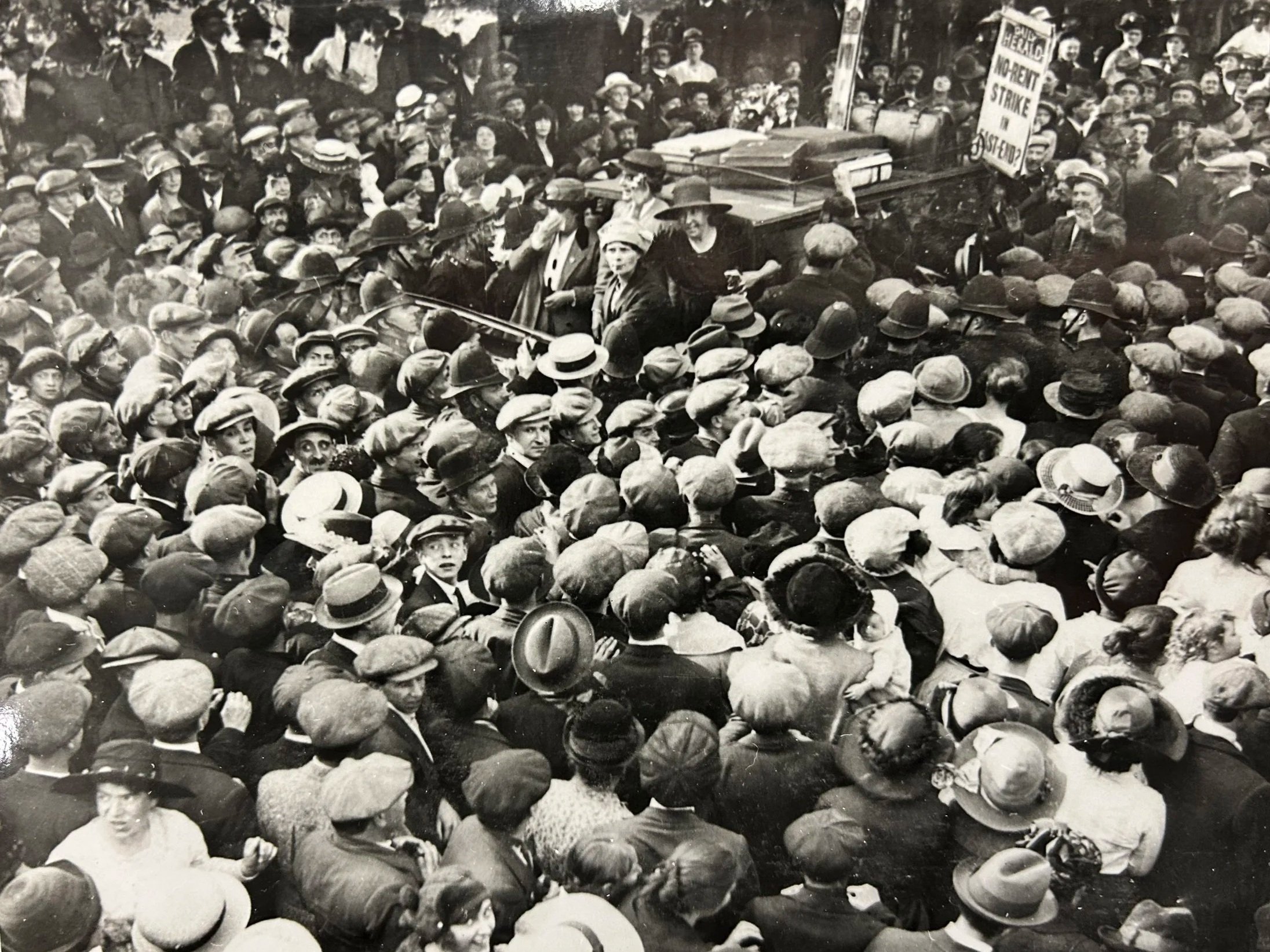
Directly after their election in 1919, Poplar’s new Independent Labour Party administration embarked on a comprehensive programme of works for the benefit of the borough’s population. They improved public baths, parks, and roads; they built new homes and compelled landlords to improve existing ones; and they increased their workers’ wages and paid women the same as men.
When Britain’s economy went into recession in 1920, unemployment rates shot up, and for the population of Poplar, life became even more difficult. The Poor Law principles stated that the money used to support poor people had to be raised from within Poplar itself, from local taxation known as ‘rates’. A useless and discriminatory policy considering those from whom this money was supposed to be raised had so little to begin with.
Things came to a head in early 1921 when the government went back on its promise to fund a road-building project in the borough that was to provide work for hundreds of unemployed men. This was the catalyst for the Poplar Rates Rebellion.
In order to continue the works they had begun and support their population, the Labour council was required to find extra funding. To this end, they decided that they would withhold the ‘precepts’ that were due to be paid to London County Council. These were payments to fund police, health, and water authorities, and the councillors argued it was impossible for them to do this and simultaneously support their poor population.
The government took the councillors to court and on 21 July 1921 the judge ordered that the councillors must pay the amount due, or be held in prison indefinitely for contempt. Five thousand people had marched from Poplar to the High Court in support of the rebels.
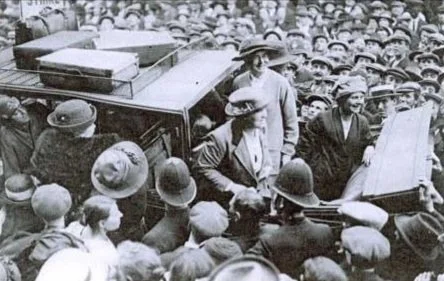
The councillors continued to refuse to pay and as a result, thirty of them were sent to prison in September 1921, five women to Holloway, and twenty-five men to Brixton. Council business was conducted while they were incarcerated, and they enjoyed huge public support. Nellie Cressall, six months pregnant at the time with her sixth child, was placed into solitary confinement.
The government, in the face of enormous public support for the councillors, realised that they had made a mistake in imprisoning the pregnant Cressall. It was a public-relations disaster that even conservative newspapers found difficult to defend. The government was terrified that she would go into labour or suffer health complications while in prison, so she was told that she was discharged on medical grounds. However, Cressall refused to leave the prison unless the government also released her fellow councillors and agreed to their demands.
In early October, the neighbouring councils of Bethnal Green and Stepney also voted to refuse to pay the precepts. The government, worried that the situation would get out of hand, conceded and passed a law reforming London’s local government funding which required richer boroughs to contribute to the support of poorer ones.
The Poplar Councillors were released victorious and set a precedent for the following years: other councils such as Clay Cross in 1972 and Liverpool in 1985, took similar rebellious approaches in attempting to achieve fairness for their populations. ‘Poplarism’, as it came to be known, embodied prioritisation of human need over finance, a willingness to break the law or confront central government to secure funds to help poor people, and the belief that wealthier areas should subsidise poverty relief of poorer ones.
Click to read more about East London Music Group →